Post-frame sales
A Post-Frame CRM Should Know the Building and the County
A post-frame CRM has to hold what a contact list can't: the building they want, the county it sits in and how long they have waited for a call, from the first ring to the signed contract.
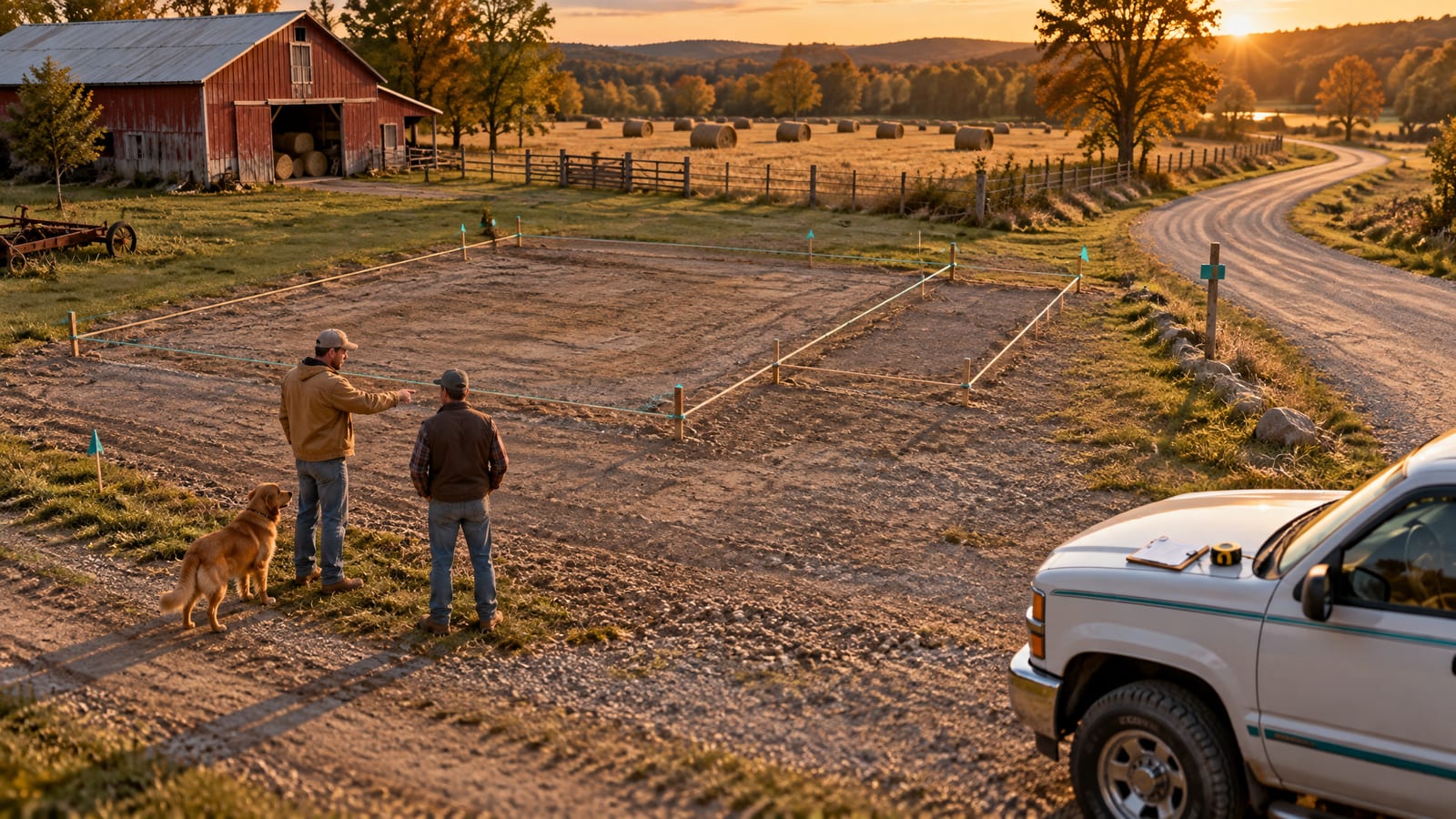
What a post-frame CRM has to hold
A contact list knows a name, a phone number and a dollar figure somebody typed. Sales software for this trade has to know what the figure is made of, because the lead is a building: a 40x60 shop with 14-foot walls and a 12-foot lean-to, on a parcel in one particular county.
So every deal has to carry five things:
- The building. Its type on the card and, once drawn, the estimate's total as the card's figure, so the number moves when the lean-to does.
- The county. Whether a permit is required changes the price and the start date.
- The clock. A lead can be a $30,000 hay barn or a $250,000 barndominium, and it cools by the hour while nobody rings it.
- Where it came from. A home show, a yard sign, a Facebook ad, a lumber yard referral. More in where pole barn leads come from.
- How you sell it. A materials package with an independent crew you line up, a turnkey build, or design-build with subs, each with its own contract and payment shape.
Where pole barn leads leak
Four places a post-frame sale goes quiet before anyone decides to lose it.
The lean-to got added. The number didn't.
The customer adds a 12-foot lean-to on the site visit. The estimate gets redone, but the card the owner reads on Monday still shows the old number.
The county wanted stamped drawings
The customer said yes, then the permit office asked for engineered plans and a site plan. Now the margin or the start date takes the hit.
Spring, and the phone rings on the roof
Inquiries pile up in the weeks the crews are flat out. A call rings out, becomes a notification and scrolls away by lunch.
The yard passed you a name
A lumber yard referral, a home show card, a form filled in at nine at night. Each lands somewhere different, and nobody knows which rep owns it.
Read the board by building, county and age
Every card on the Sales Pipeline Board says what the customer wants built (commercial shop, hobby shop, equipment storage, barndominium, riding arena), where the lead came from, how far through the stage's checklist the rep is, and the permit verdict with the town or county that governs it.
Each column sums the money in that stage. A new lead wears HOT LEAD for five minutes and STALE once a day passes with nobody ringing it, so Monday's first call picks itself.
Four questions for the first call
Most of the price is set by answers you can get in ten minutes. Frame Building News suggests opening with what problems the new building will solve. Then pin down these four.
What is it for?
Equipment, a hobby shop, horses or a home. Use decides whether a farm exemption can apply. Make it a step on your Contacted checklist, with a note the next rep can read.
See how it worksHow big, how tall, and what hangs off it?
A 40x60 with 14-foot walls and a 12-foot lean-to is a different post, truss, steel and door package from a 30x40 with 10-foot walls. Drag it to size, hang the lean-to, and the material list counts itself from the model.
See how it worksWhere exactly is the site?
Street address, acreage, and whether it sits inside town limits. The address routes the lead to the rep who covers that county, ZIP or state, and tells the permit check whether the town or the county governs.
See how it worksHow are they paying, and when do they need it standing?
A lender, the deposit and the progress draws end up in the contract; the date tells you whether it fits this season. After they approve, the details form asks for the lender, pre-filled with what you already hold.
See how it worksOne 40x60 shop, through all nine stages
Each stage is named for something that actually happens. One example job:
New Lead
Sunday night a form comes in: 40x60 shop, 14-foot walls, a lean-to. It lands wearing HOT LEAD and goes to the rep who covers that county and is not already buried.
Contacted
By Monday morning the tag reads GOING COLD. The rep rings from the business number and works the four questions. Where we hold that area's rule, the permit chip is already on the card.
Create Estimate
The button on the card opens the drawing tool with the customer already filled in.
Estimate Sent
One link: their building in 3D, the price, the payment schedule and a countdown on how long the price stands. You are alerted on the first open, and see a second name if it gets forwarded.
Estimate Approved
They tick the line naming the exact total and press approve. The value locks and your team is told.
Info Submitted
They fill in what the contract needs, pre-filled with what you hold: legal names, the property, the lender, permits.
Contract Sent
The agreement is written from their answers and the approved price, with your payment stages and their state's lien notice. You release it.
Co-sign Pending
They signed on their phone. Your signature is all that is outstanding.
Ready to Start
Nothing left to sell. Starting the job hands the card to the build board.
Permit questions belong in the sale, not the build
The same 40x60 can need nothing as a farm building out in the county and a permit, plan review and fee inside town limits a mile away. Both belong in the first price the customer hears.
Open the deal and its address fills the permit check. It works out whether the town or the county governs, then answers on one card: required, conditional or not, the typical cost for a 40x60, whether a farm exemption applies, when stamped plans are needed, the fee, the review time, and the office's phone. Inside town limits the county rule shows underneath, and a rule nobody has confirmed by phone carries a call-to-confirm strip. It is decision support: confirm with the local authority before you quote. More in pole barn permit requirements.
A missed call in the spring rush becomes a name on a list
A call that rings out while you are setting trusses is often the only sign that lead exists. Your business line rings every cell you listed and every signed-in screen at once. If nobody answers, it takes a message, writes it out, files it on the customer and, if you switch it on, texts them back.
The miss becomes a task due now, named for the caller, and joins the call queue beside the calls a rep planned, each with Call and Done. Nothing drops off until someone presses one.
Which kind of CRM fits which post-frame company
Several tools court post-frame builders, each built for a different job. As of September 2026, from each company's own pages:
- Velocity 360 describes itself as sales software designed specifically for post-frame builders and pole barn dealers: replies to new inquiries within 60 seconds by text and email, a 75-day nurture, automatic quote follow-up, and leads and 3D designs flowing in from SmartBuild and IdeaRoom. A strong fit when ads and configurators bring a high volume of leads.
- QuoteIQ markets a CRM for pole barn contractors with tiered pricing (shell, insulated, finished), satellite lot measuring, per-project job costing and phase scheduling, on published plans from $29.99 to $399.99 a month. A fit for quoting and scheduling in one app at a set monthly price.
- SmartBuild designs post-frame buildings, generates material lists and produces proposals. It is an integration partner that Leads2Build works alongside; see what happens after the SmartBuild estimate.
- Post Frame Advantage presents itself as all-in-one post-frame software: 3D design, quoting, project tracking, procurement and analytics.
- Leads2Build fits the builder whose leak sits between the first call and the signed contract.
For the wider field, see construction CRM and best construction CRM.
Put one of your own leads on the board
Questions builders ask
What is a post frame CRM?
It is sales software that tracks each lead as a building on a site, not just a name and a dollar figure. The record carries the building type, the estimate's total, the county permit answer, how long the lead has waited and the stage checklist, so Monday's board matches the quote.
Is Excel considered a CRM?
Not really. A spreadsheet holds a list of names, and many shops start there, but it will not flag a lead nobody has rung, turn a missed call into a task, or tell you the quote was opened last night. When you move, Leads2Build brings a spreadsheet of leads onto the board.
Does a CRM replace SmartBuild for a pole barn builder?
No. SmartBuild designs the building, counts the materials and produces the proposal; it is an integration partner. A CRM works the lead around it: the first call, the follow-up, the permit question and the contract. In Leads2Build you connect your SmartBuild login and pick whether new estimates open there or in the built-in 3D designer; switching never touches existing jobs.
Should a pole barn builder check permits before quoting?
Yes. Whether a permit is required, what it costs, whether a farm exemption applies and whether stamped plans are needed all change the price and the start date. Leads2Build checks a lead that arrives with an address automatically wherever we hold that area's rule; where we hold none, it says so and names the office to call.
Can one CRM handle kit sales and turnkey builds?
Yes, if the contract follows the way each job is sold. Leads2Build's contract library starts from three complete contracts: material supplier and installation coordinator, turnkey builder, and design-build with subs. You can keep several named contracts, switch a job's agreement to the right one, and set payment stages such as 50/50 or four draws.