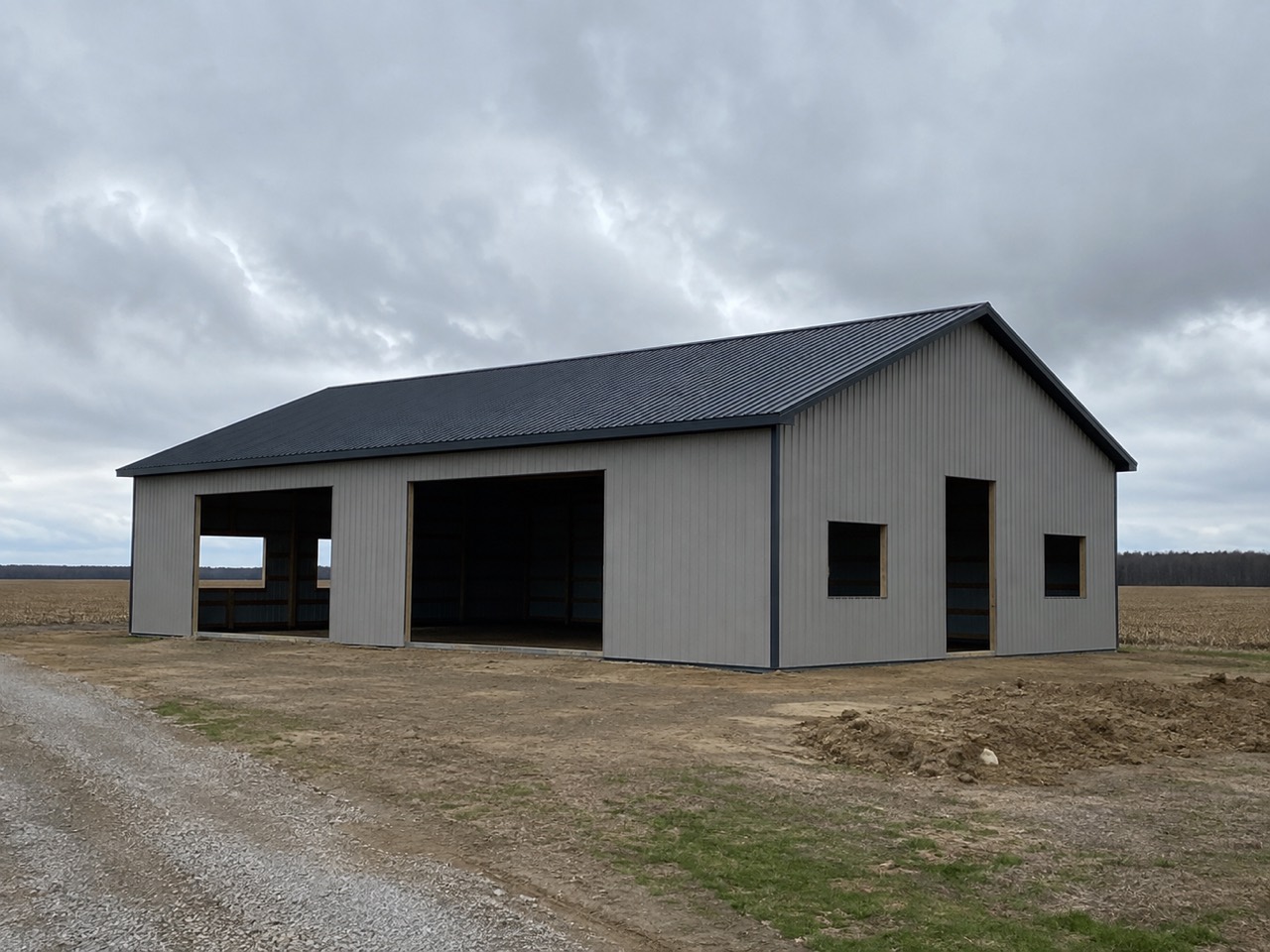
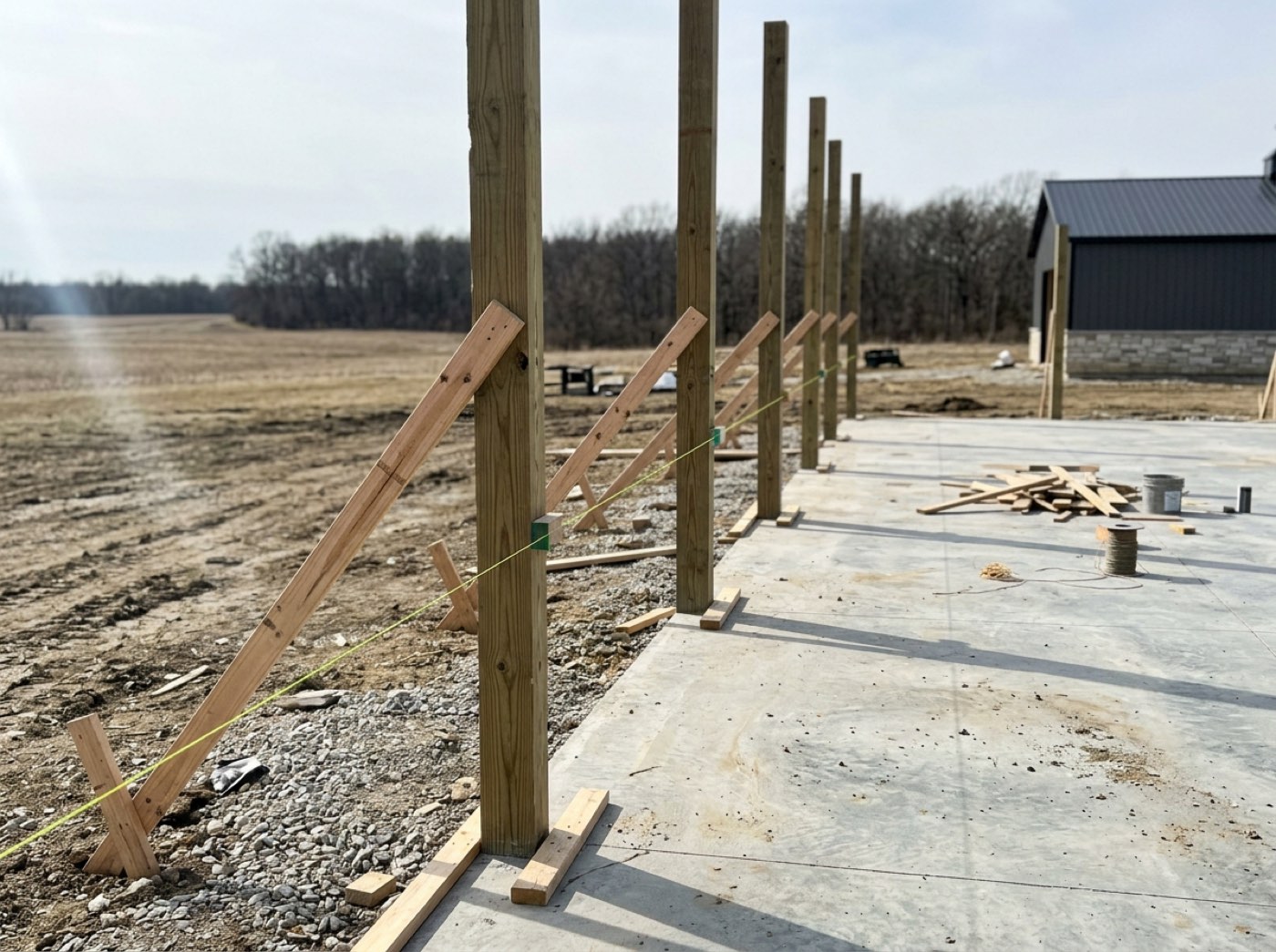
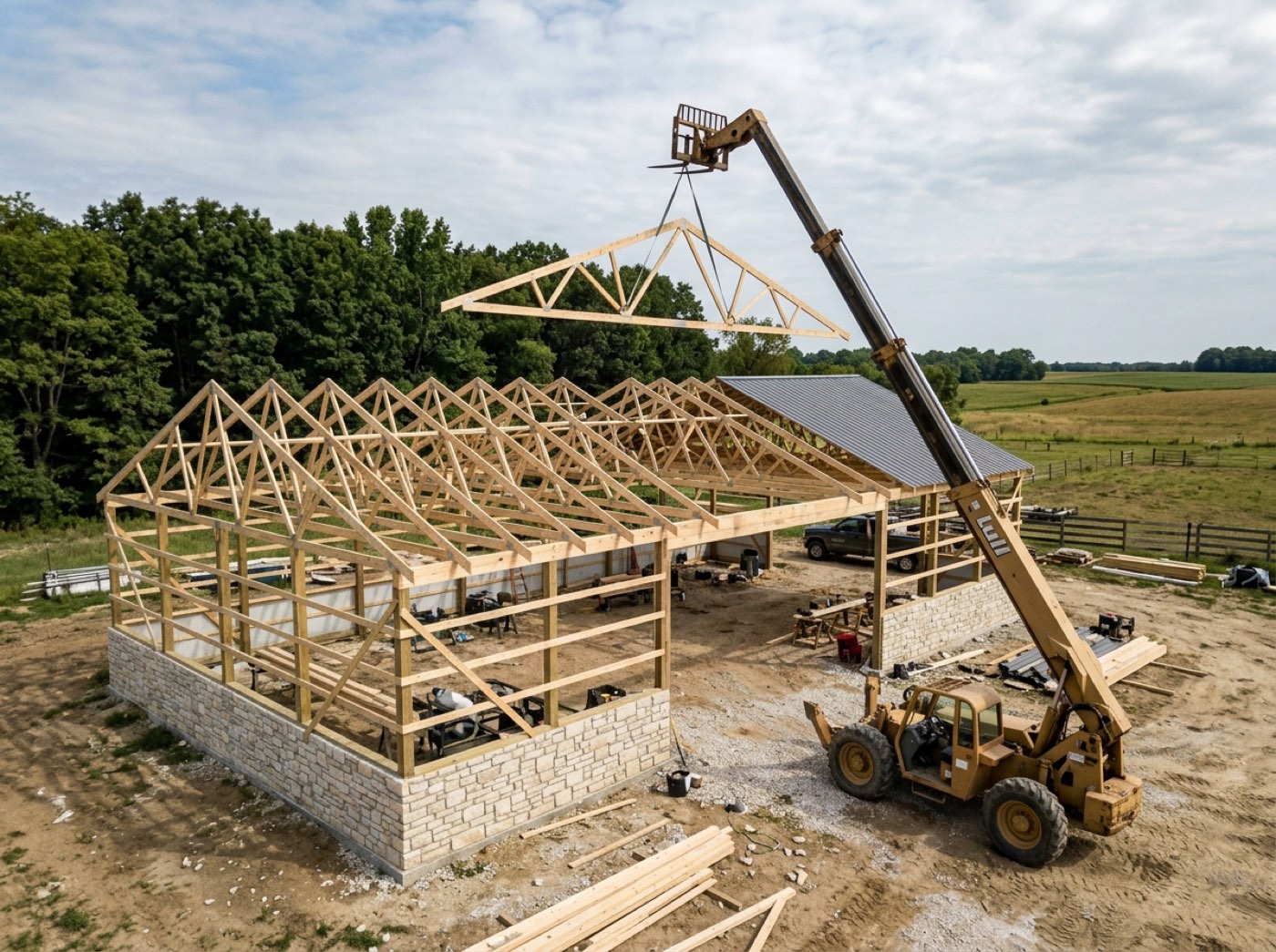
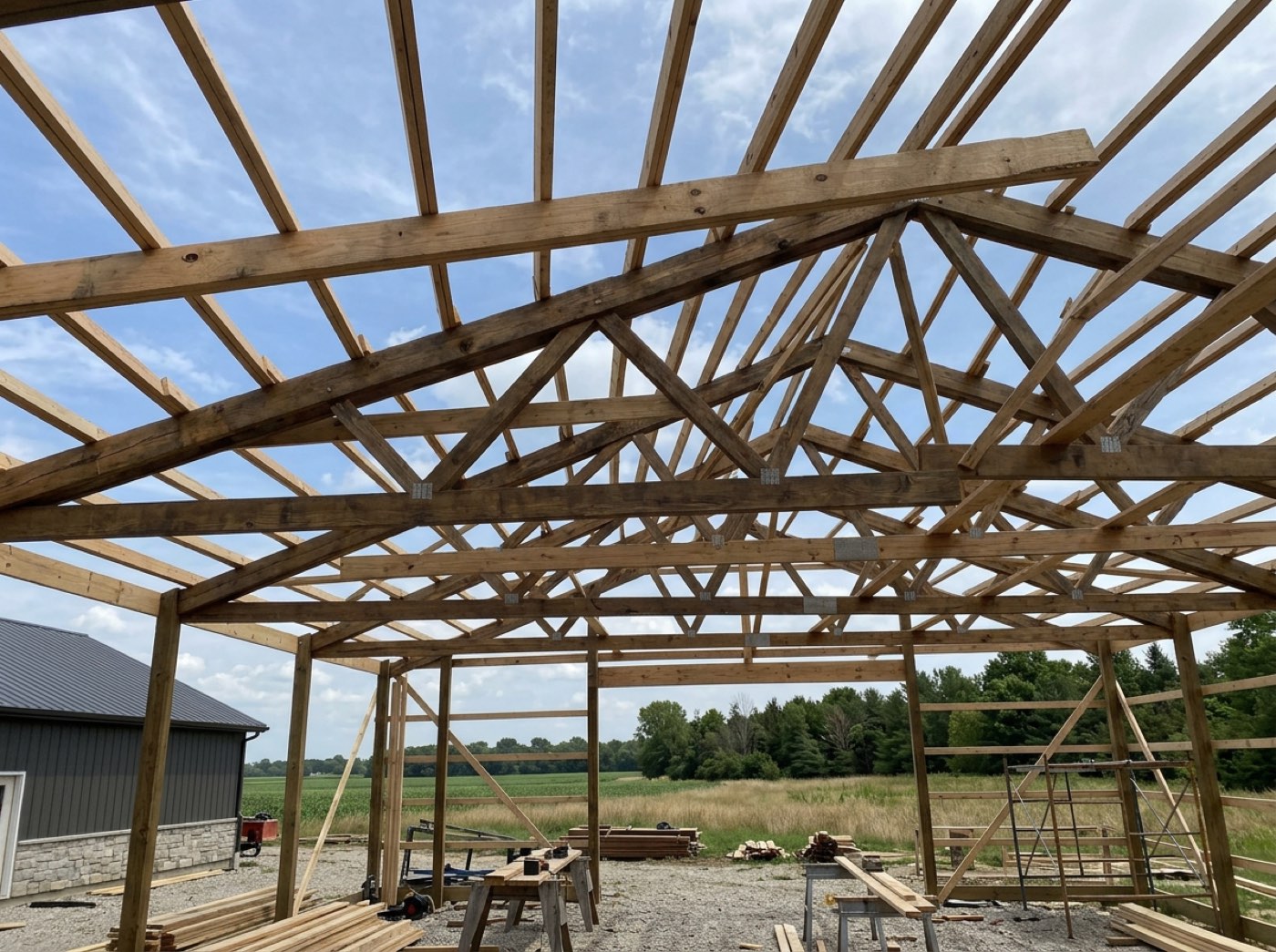
One link, no password: their building in 3D and their number, kept current — and you see when they open it. Then the same link becomes the contract and the project dashboard.
The operating system built exclusively for post-frame and barndominium builders.
Instead of: A PDF attached to an email, a separate contract to chase, and a customer who phones you for updates because there is nowhere for them to look.
Custom Building Estimate
Leads2Build
Leads2Build Construction
Custom Building Estimate
Zimmerman Equipment Barn
Prepared for Marla Zimmerman·August 24, 2026
Building
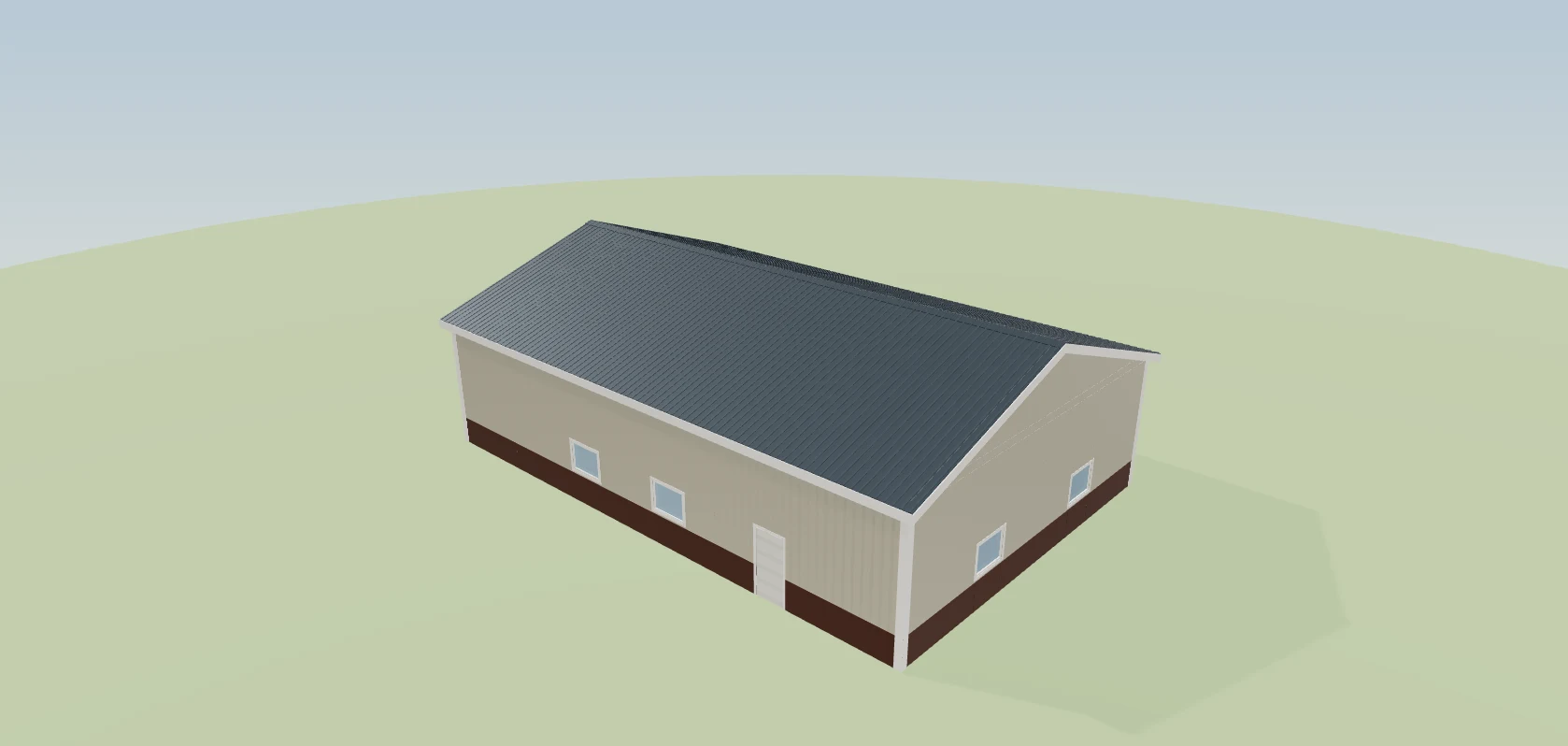
40′ × 64′ × 16′
Footprint
2,560 sq ft
Roof pitch
4/12
Your investment
$84,320.00
Review & approveView your 3D building
Private, encrypted link prepared for youValid through September 23, 2026
Pricing held for
6d 04h 17m 38s
The real screen, drawn from the product’s own design system. Sample data — no customer information appears here.
Scroll — 13 steps
Where most builders start
A PDF is a dead end
You export the estimate, attach it, and hit send. From that moment you know nothing. Did they open it? Which page did they stop on? Did they show the wife? When they have a question they phone you, and when they want a change you export the whole thing again and hope they open the right version. The document cannot answer a single question on your behalf, and it cannot tell you anything back.
The alternative most builders are living with — and the reason everything below exists.
A PDF is a dead end
Estimate_FINAL.pdfsent 6 Mar
ESTIMATE_FINAL_v2.pdfsent 11 Mar
ESTIMATE_FINAL_V3_REVISED.pdfsent 14 Mar
Did they open it?—
How far did they read?—
Is it still the current price?—
And the customer has all three.
Beat one
You send a link, not a file
Send Estimate delivers a link to whoever needs to see it. The customer opens a page in your colours, with your logo — not a portal they have to make an account for, not an app to download, just a link that works on the phone they're already holding. Because it's a page and not a file, it's still right tomorrow: revise the estimate and the same link shows the new one. Built exclusively for post-frame and barndominium builders, so the page talks about their building, not about software.
A PDF is frozen the second you export it. This is never out of date.
Who gets the link, and how. This tab does not change the price or what appears on the quote.
Recipients
Primary
Dawson Hoover
dawson.hoover4@demo.invalid
(717) 555-0162
+ Add another recipient
Expiration date
Sep 23, 2026
Pricing stays valid until this date. Left alone, it holds for exactly 30 days from the moment you send; pick a date and it holds to the end of that day.
Personal message
Add a note that rides with the email or text…
Delivery method
EmailTextBoth
The real screen, drawn from the product’s own design system. Sample data — no customer information appears here.
The Your Custom Building section renders the actual structure — the one you designed, at their dimensions, with their roof pitch and their door placement. Not a stock photo of a building that looks a bit like theirs. They can turn it around and look at it, and the moment they do, the conversation stops being about a number on a page and starts being about their building. When a customer can see it, it feels real — and real is what gets signed.
A line of text reading 40×64×16 asks the customer to imagine it. This shows them.
ViewOverviewFrontGable endPlanLayersFinishedRoof offFrameDrag to rotate · scroll to zoom
The real screen, drawn from the product’s own design system. Sample data — no customer information appears here.
Beat three
They pick the colours themselves
Roof, walls, wainscot, trim, doors — they choose, and the building updates in front of them. This is the section customers spend the longest on, and it's the one that turns an estimate into something they want to show people. Choosing makes it theirs. It also settles the colour conversation before it becomes a change order.
The usual version of this is three phone calls, a colour chart photographed badly, and a wrong order.
Your Investment breaks the number down the way you want it broken down — by section, with the labour line, markup, and sales tax shown or hidden as you choose. Underneath it, the Payment Schedule states exactly what is due and when, and an optional financing line shows the monthly figure. The customer isn't deciding whether to trust one big number; he's reading a breakdown, and a price he understands is a price he trusts.
One total at the bottom of a PDF invites exactly one question, and it is the wrong one.
As low as $1,915.24/month (60-month estimate at 8.5% APR)
Illustrative only — based on a 8.5% APR over 60 months. Actual financing terms vary by lender and credit profile. We are not a lender and do not provide financing.
The real screen, drawn from the product’s own design system. Sample data — no customer information appears here.
Beat five
It answers the questions you always get asked
Your Building Journey, Why Choose Us, testimonials, the warranty, your builder notes, and an FAQ — all on the same page, all editable, all optional. These are not filler. They are the questions you answer on the phone for every estimate you send, answered once, in writing, at the moment the customer is actually wondering. A customer whose questions are answered before he asks feels looked after.
Every one of those questions is otherwise an interruption to your day, and they arrive one at a time.
Behind the page, the estimate keeps a list of who has viewed it: each person, how many times, when they first and last looked, and how long they spent. On the Miller Road shop it's three people, eleven views and twenty-four minutes — Rachel Hostetler six times, the last at 9:41 at night. That's when you call. Your rep calls at the right moment instead of guessing, and the customer feels you're paying attention, because you are.
A PDF can't tell you it was opened, forwarded to the spouse, and read again late at night.
No printing, no scanner, no 'can you send that again in a format I can sign'. The Approve and Sign section is at the bottom of the page they have just read, at the moment they are most convinced. The signature is captured and stamped on the document.
The gap between 'yes' and a signed document is where deals go cold.
Review your estimate above, then approve below to lock in this pricing and start your project.
✓I have reviewed the estimate above and approve the project for $93,348.50. I understand this serves as my digital authorization to proceed.
Approve & Start My Project
Encrypted & recorded with a timestampYou agree to the payment schedule above
The real screen, drawn from the product’s own design system. Sample data — no customer information appears here.
The first transformation
The estimate becomes the intake form
The instant they approve, the same link asks for what you need to actually start: the details, the site information, the decisions still outstanding. The customer never gets a second email with a second link and a second login — they carry straight on. And because the intake is part of the estimate rather than a separate form, what they enter is already attached to the right job.
The usual version is a Word document emailed separately, filled in on half of the jobs, and re-keyed by somebody in the office.
Thanks for approving your estimate. We need a bit of information to draft your contract. Anything we already know is pre-filled — please correct anything wrong.
Identity
Legal name + date of birth
Mailing Address
Legal correspondence address (separate from delivery)
Property Info
Build site address + ownership status
Where the building will go.
The real screen, drawn from the product’s own design system. Sample data — no customer information appears here.
The agreement is generated from what has already been agreed — the same building, the same figure, the same schedule, the same details they just gave you. There is no retyping step, which means there is no retyping mistake. It is counter-signed on your side and the executed document lives with the job.
A contract rebuilt by hand from an estimate is where the price and the scope quietly drift apart.
This waiver ensures that both parties understand the expectations, conditions and limitations of the project. By applying your initials to each section, you acknowledge that you have read, understood and accepted the related terms.
1MaterialsMaterial substitutions of equal or better grade may be made where supply requires it. Colour variation between production runs of steel is inherent and is not a defect.
2Site PreparationThe site must be within four inches of level and accessible to a loaded truck and a lift. Additional excavation, fill or rock removal is billed as a change order.
3LandscapeRuts, compaction and damage to lawn, drives and buried private lines within the working area are an expected consequence of construction and are not restored under this agreement.
4Stamped Plans & PermitsEngineered stamped plans and permit fees are excluded unless itemised in Part 1. The client is responsible for setback, easement and covenant compliance.
5UtilitiesPublic locates are arranged before digging. Private lines — irrigation, invisible fence, yard lighting, septic — must be marked by the client.
6Marketing & Media Use WaiverThe contractor may photograph the completed structure for portfolio and advertising use. The client's name and address are never published.
7Change OrdersNo change to scope, materials or price is effective until a written change order is signed by both parties. Verbal instructions on site are not change orders.
8Contract & Cancellation PolicyDeposits reserve production capacity and material pricing. Cancellation after materials are released is subject to restocking and freight already incurred.
9InsuranceThe contractor carries general liability and workers' compensation. Certificates are available on request. Builder's risk on stored materials is the client's.
10Liability WaiverThe client and their guests enter an active construction site at their own risk. Children and animals must be kept clear of the working area.INITIAL
11Labor ForcePortions of the work may be performed by qualified subcontractors. The contractor remains responsible for the work and for the site.INITIAL
12Building ProcessConstruction is weather-dependent. Schedule dates are estimates made in good faith and are not guarantees of completion.INITIAL
13Construction MethodPost-frame construction with engineered trusses and laminated columns. Structural design conforms to the applicable building code for the jurisdiction.INITIAL
Part 3
Comprehensive Warranty
Labor & Craftsmanship
10-year limited warranty on workmanship from the date of substantial completion.
Materials
Manufacturer warranties pass through to the client in full, including the steel finish warranty.
Lifetime Structural Design
The engineered structural design is warranted for the life of the structure.
Warranty Process
Claims are made in writing. The contractor inspects within fourteen days of notice.
Signatures
Client
Marla J. Zimmerman
Signed 16 May 2026, 8:41pm
Leads2Build Construction LLC
Dale Whitmore, Member
Counter-signed 17 May 2026, 7:12am
Fully executedDownload PDF
The real screen, drawn from the product’s own design system. Sample data — no customer information appears here.
The third transformation
And then it becomes their project dashboard
The same link they first opened to look at a price now shows them their job being built: what stage it is at, what has been done, what is next. Your crew's checkpoint photos appear here as the work happens, with the updates you post, and they can message your team from the same page. The customer stops phoning to ask how it is going, because they can see how it is going.
Progress-update phone calls are pure administrative cost, and the customers who do not phone are the ones quietly worrying.
The pictures your crew takes at each stage are not just customer reassurance. They are your proof if a dispute ever arrives, your quality check on work you were not standing over, and your marketing library — already sorted by job and by stage, with no one having to remember to collect them. One habit, four returns, and it replaces the separate photo app you are paying for.
Photos scattered across six phones and a group chat are worth nothing when you actually need them.
The real screen, drawn from the product’s own design system. Sample data — no customer information appears here.
The whole point
One link, the entire relationship
From the first look at a price to the last photo of a finished building, your customer used one address and never made an account. You never exported a document, never chased a signature by email, and never fielded a call that the page could have answered. That is the difference between software that stores your work and software that does some of it.
One link, no password: their building in 3D and their number, kept current — and you see when they open it. Then the same link becomes the contract and the project dashboard. Thirty minutes with Keith, on one of your real structures — and the link we build is yours to keep whether or not you go any further.