The Money Trail
Billed on the build's own points, every extra written up and signed, the bank's draw package built from the stages — and all of it in the books without anyone typing it twice.
The operating system for post-frame and barndominium builders.
Instead of: Invoicing at ten at night from memory, extras built and never charged, a draw request assembled by hand for the bank, and books that don't match the jobs.
The payment points are agreed on the quote
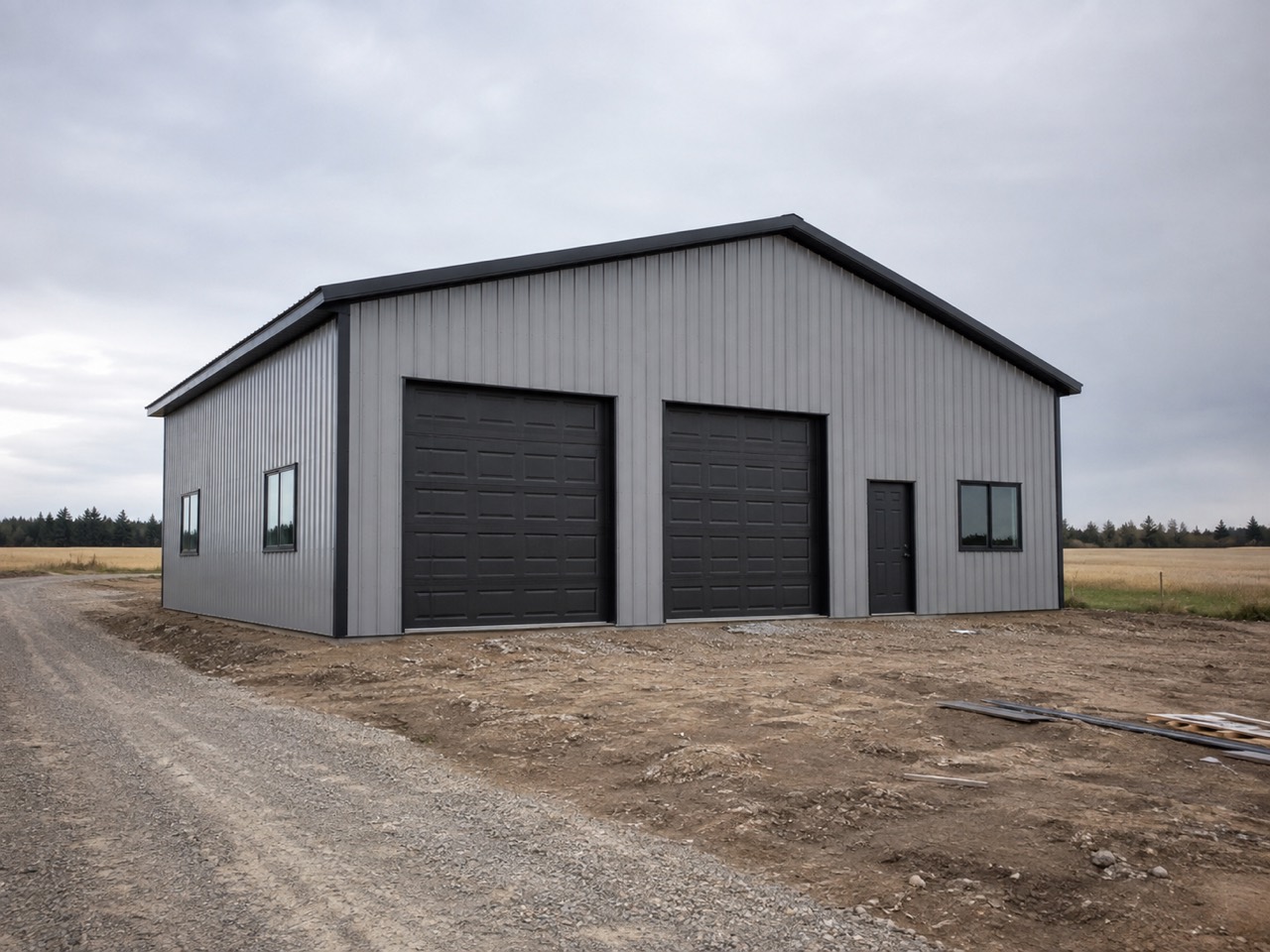
The schedule is set before the customer signs, and it has to add up to 100%. On the Yoder 40×64 shop it's 30% down ($26,535), 40% on delivery, 20% at frame complete and 10% at the end — the same four bills at the top of this page. Save the ones you use as presets: the standard cycle, half down, a four-stage shop build. The customer reads the same schedule on the quote, so no bill comes as a surprise — and a customer who's never surprised pays on time.
Payment terms worked out after the job has started are terms you negotiate from the weaker side.
Every bill comes straight off its point
New Invoice opens on the job's payment schedule: each point with its share of materials, labour and markup, ready to go — one invoice per point, four in one press. The number on each is the number on the signed contract, because it's worked out from it. Whoever does your billing gets their evenings back.
An invoice typed from scratch is where a 60% draw turns into 55% and nobody notices for a month.
They open the invoice on a link, not an attachment
The customer gets a link to the invoice itself — INV-2026-0042, the delivery payment on the 40×64 shop, $25,728 due by September 8 — in your name, with how to pay at the bottom and a PDF if they want one. When a bank is lending on the job, the lender is named on the bill. A customer who can open the bill on his phone and see exactly what it's for pays without the phone call.
A PDF invoice in an email is one more attachment to lose, and it says nothing about what comes next.
Every extra written up with its cost, markup and supplier
A change order is built line by line: the doors from Kaufman Door Supply as material, framing the openings as labour, a walk door taken out of the base scope as a credit — then 12% markup and 6% tax: $6,581.84, and three days added to the schedule. What you pay the supplier and what the customer pays are on the same page. Your PM never has to choose between being nice and getting paid.
Extras agreed on site and never written up are buildings you finish for free.
They sign the extra before you build it
The change order goes to the customer's own portal. They read the cost and the schedule impact, type their legal name and sign — or decline it and say why, and that's recorded on the change order. Then it's billed the way they chose: its own invoice, folded into a payment already scheduled, or added to the balance at the end. A customer who signed for the extra doesn't argue about it on the final bill.
An extra agreed by phone is an argument waiting for the final invoice.
The bank's draw package, built from the stages
When a customer builds on a construction loan, the lender gets a page of its own with your name on it — no login. On the Hostetler barndominium, the bank's loan officer sees the contract to date, $426,850; 47.2% built, by the stage checklists; $60,480 funded; $6,720 of retainage held; and that the loan is in balance. Draw 2, shell erected and dried in, asks for $126,000. Its checklist ticks itself from the job's stages and photos, the lien waivers and the county's framing inspection sit beside it, and the sealed draw request — laid out like the G702 summary and G703 sheet a bank already reads — opens from the card. She approves it or returns it to you; draw 1 was funded by wire. The bank's money reaches your job sooner, and your office stops dreading draw week.
A draw request assembled by hand from photos, invoices and a spreadsheet is a week the bank's money isn't on your job.
Check, ACH, wire or cash — recorded the way it came
When money arrives, record how it came and the reference that proves it — the check number, the ACH trace, the wire reference. A check handed over on site is recorded the same way — no card processor in the middle, no percentage taken out of it — and a part payment leaves the balance showing what's still owed. Nobody chases a customer for money he's already paid, which is the fastest way to lose his goodwill.
A check deposited and never marked paid is the invoice you chase a customer for after he's already paid it.
Your bookkeeper never types it twice
Invoices and payments go to QuickBooks as they happen. It works the other way too: when your bookkeeper posts the check in QuickBooks, the delivery invoice on the 40×64 shop turns paid here on the next sync. The job and the books agree without anyone comparing them. Everything in one place — the quote, the bills, the draws and the books — for post-frame and barndominium builders only.
Two sets of numbers kept by hand will disagree, and it's always at tax time that you find out.
What the job is making, while it's still open
Quoted against actual, while you can still do something about it: labour against the $36,000 estimate, materials against $22,500, each crew and sub on its own line with how it's paid, and the margin at the top. Accounting gathers the rest of the money in one place — invoices, crew payouts, sales payouts, hour approvals — with money in and out over 30, 90 or 365 days. An owner who sees his margin live feels in control, because he is.
A profit you only see at year end is a profit you can no longer protect.
Follow the money
on one of your jobs.
Billed on the build's own points, every extra written up and signed, the bank's draw package built from the stages — and all of it in the books without anyone typing it twice. Twenty minutes, on one of your real structures — and the link we build is yours to keep whether or not you go any further.