The step editor in payroll progression lets each checkpoint give any mix of rewards, and the guide beside it maps each lever to the behaviour an owner can expect. A pay raise buys staying: pay growth cuts quits most among the best performers, but it doesn't change pace. A surplus multiplier gives one person a bigger slice of every job's surplus; it moves money inside the crew rather than adding any. That cuts both ways: lower the multiplier of someone the crew is carrying and the share he didn't earn goes to the people who carried him, which is what keeps good hands from easing off or quitting. A flat bonus buys a push toward one close finish line, strongest in the first 90 days. A title costs nothing and doesn't fade the way a raise does. A career path shows the next position and exactly what earns it. Photo checkpoints on each stage (stage checkpoints) answer the oldest worry about speed pay, that a crew paid to finish early will cut corners nobody finds for a year. And strikes stall progress for conduct, whether or not the job made a surplus. Start from the problem (jobs over budget, one man dragging the crew, corners cut, defects that show up months later, good people leaving for lack of a future) and the levers that fit move to the top. Built exclusively for post-frame and barndominium builders, where one lead's pace sets the whole crew's surplus.
Also called: crew incentives · employee incentive levers · raise vs bonus · surplus multiplier · crew bonus psychology · how to motivate a framing crew · retention raise · sign-on bonus · gainsharing for builders · incentive pay construction
Start from the problem, not the reward
Try itWhich reward? opens on What do you want to fix?: jobs running over the labour budget, best people getting poached, new hires quitting in the first few weeks, the crew cutting corners, people burning out, nobody wanting to lead, grumbling that someone got more, or a short push for the end of the season. Sales paths add flat sales. Pick one and the advice shows under it. For jobs over budget: make sure the figured days can actually be beaten, because a pot of $0 motivates nobody, then give the lead who sets the pace a multiplier step and a title. The rewards that fit move to the top, marked Fits this problem. Open any reward for what it pays, what to expect, why it works, what to watch for, what to pair it with and a worked example.
An owner building a raise path picks the reward he's used to, and a raise doesn't fix a crew that runs over budget.
Each reward drives a different behaviour, so the guide starts where the owner is: the problem he has on his jobs.
A multiplier moves the slices, both ways
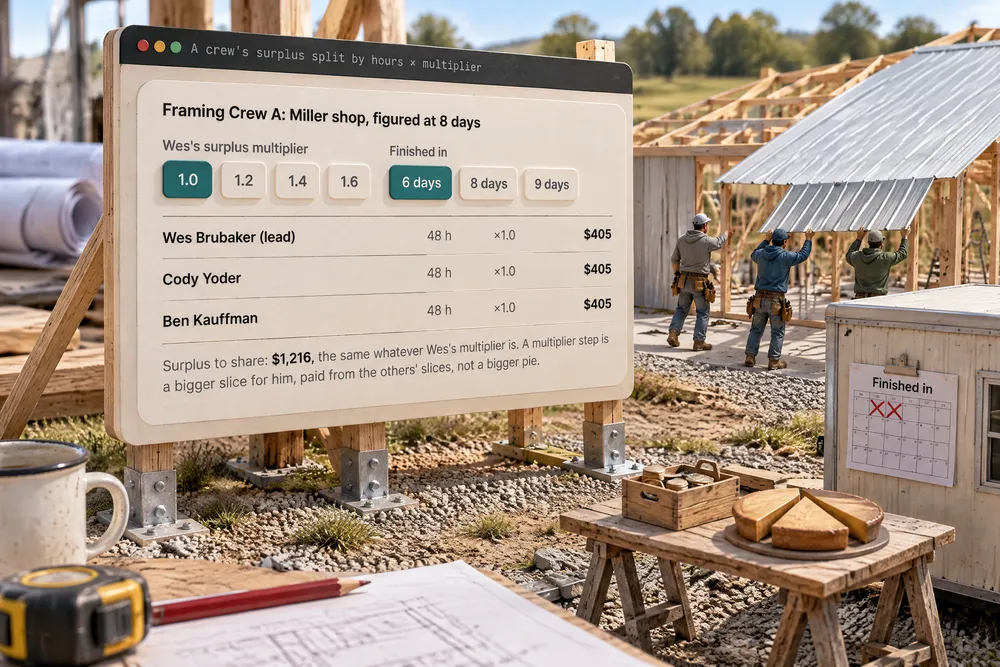
Try itA job's surplus is the labour budget minus the hours paid and equipment, split by each person's hours × multiplier. On Ridgeline's Miller shop, figured at 8 days and finished in 6, Framing Crew A shares $1,216: $405 each at 1.0. Raise Wes to 1.4 and he takes about $501 while Cody and Ben take about $358. The pot is the same, so a raise for one is paid by the others: put it on the lead or the pace-setter, for a reason the crew can see. Now turn it the other way. Ben has three filed reports for slow, sloppy days, and Wes and Cody have been carrying him. Lower Ben to 0.6 from the next job and what he loses goes to the two who carried him. People cut their own effort when a capable partner free-rides, so a cut like that is what keeps the good ones from easing off or leaving. Make it from filed reports, never a crew vote, write down the way back, and change it for the next job, never one already worked. Finish on the figure or a day over and every multiplier is worth $0, so beatable figured days come first.
A slacker on a shared surplus is paid for the hours he drags out, and the men carrying him start to wonder why they bother.
Sanctions keep shared pay working: free riding took over in experiments without them and cooperation neared complete with them. A cut with a visible reason does that without breeding resentment.
Raise, bonus, title or PTO: each one buys something else
A pay raise is permanent and compounds. It cuts quits most among the best performers, but workers paid more than they expected only worked harder for a few hours, so give it to proven, steady people for something lasting, not for one good month. A flat bonus is paid once. Effort picks up as it gets close, and retention bonuses work best early in the job, so several small ones at 30, 60 and 90 days beat one $1,000 cliff at six months. A title costs nothing: a purely symbolic award lifted performance about 12%, and people adapt to a raise within about four years but not to a rise in status. Tie it to real duties. PTO guards against burnout more than it moves pace. Book it so it can be taken. A commission raise keeps strong reps selling past target, but protect the price floor, or the raise pays reps to discount.
A raise expected to fix pace, a bonus cliff people stay for and then leave, a title with nothing behind it.
The research is clear about what each lever buys. Written next to the field, it reaches the owner at the moment he's choosing.
Speed pay without the shortcuts
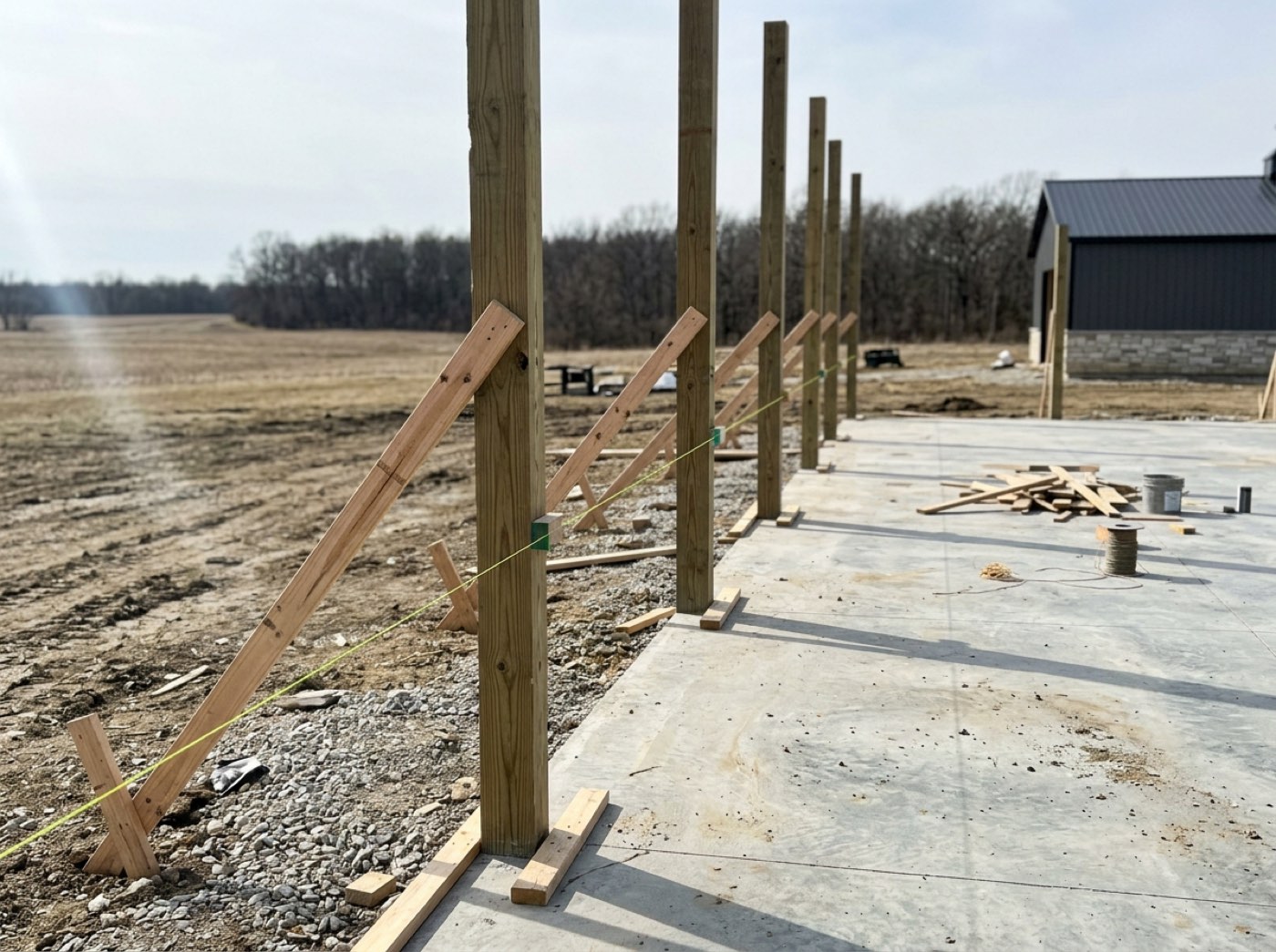
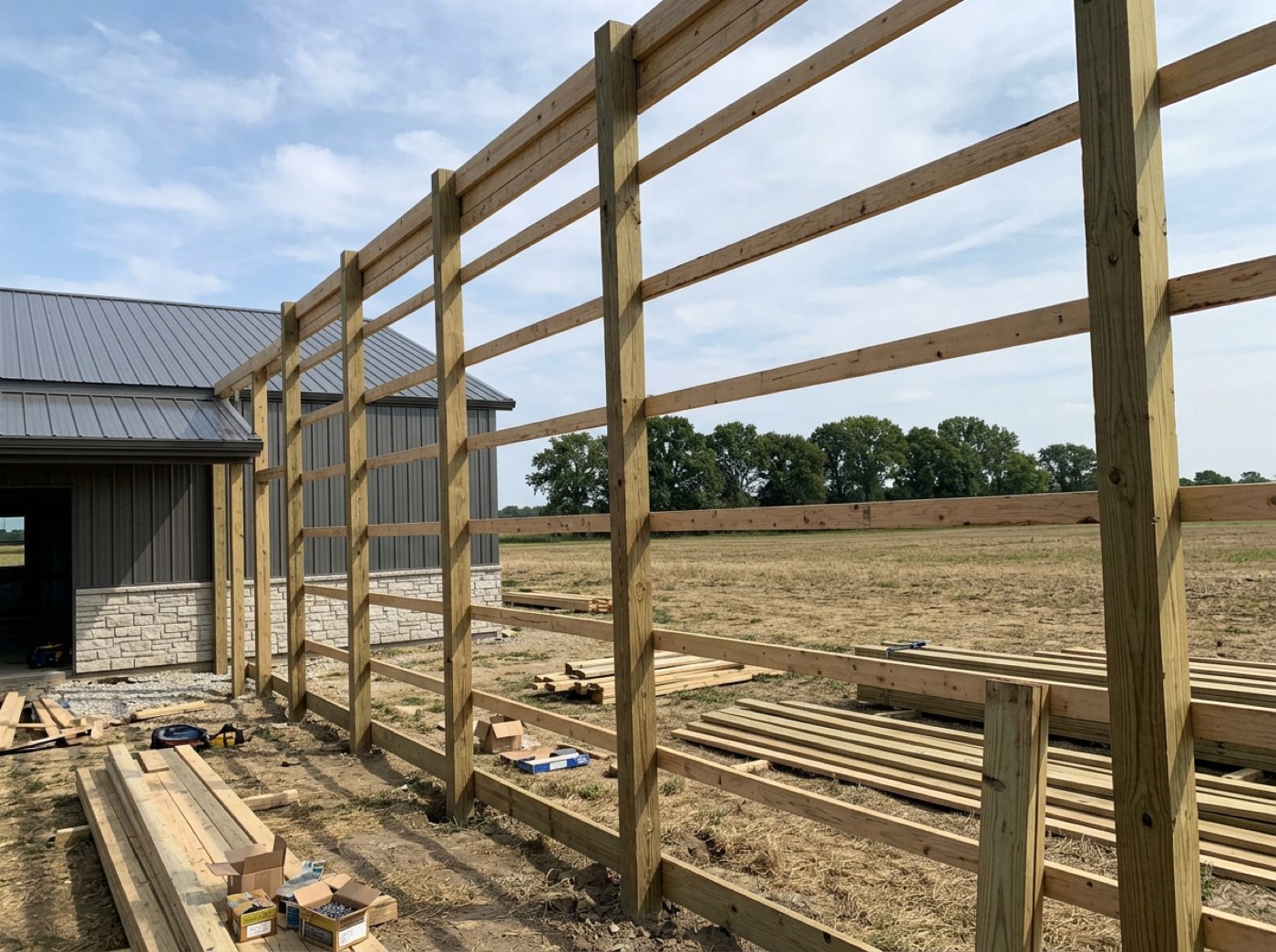
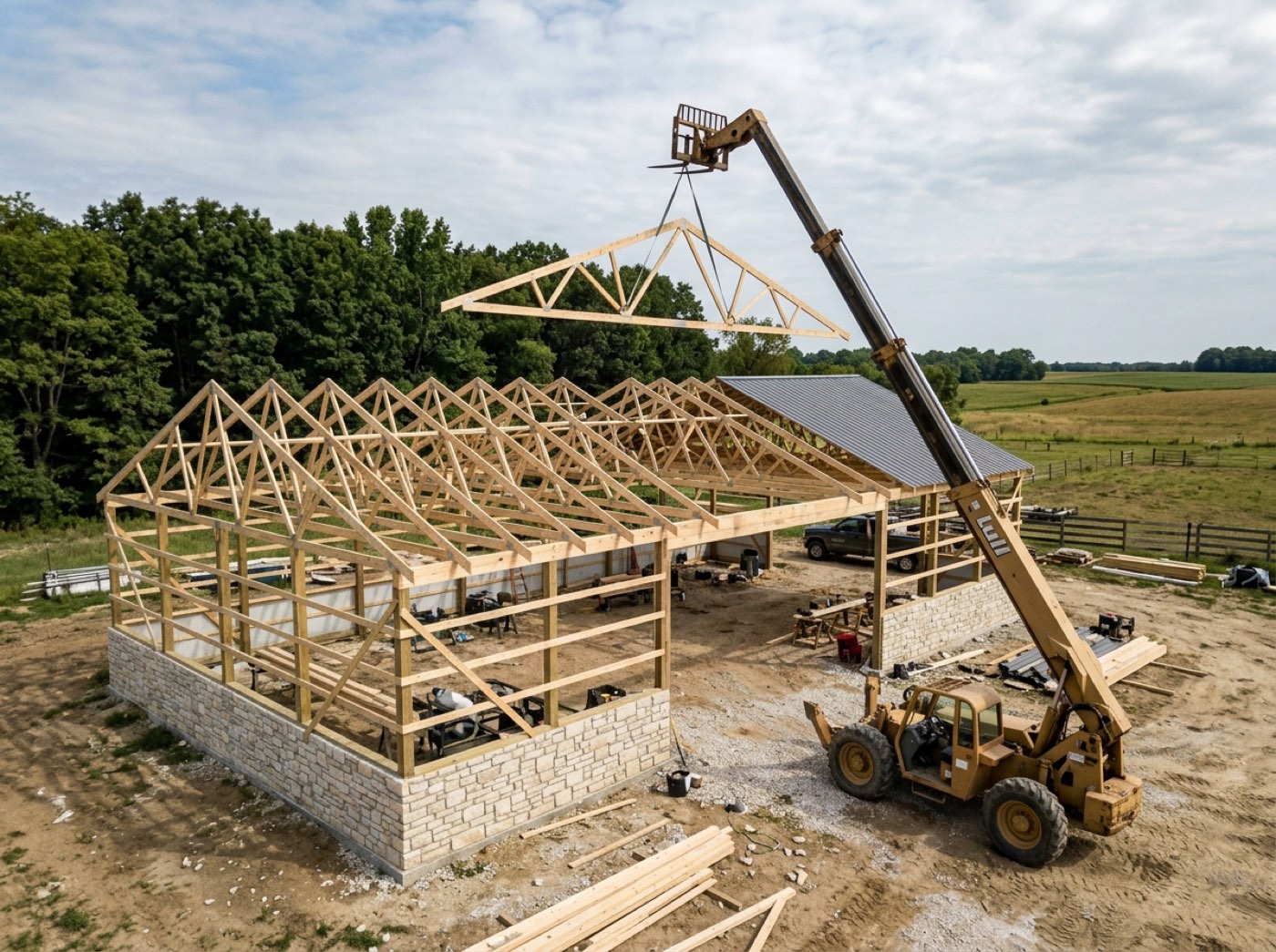
The fair worry about paying a crew to finish early: they'll finish early by skipping what nobody checks, and it won't show for a year. A crew rushes the framing and puts up no backing for the drywall. The drywallers fight it for a day. Or nobody says anything, and the problems surface five months later on a job whose crew has moved on. Pay strongly on one measured thing and people pull effort off the unmeasured ones, so the answer is to measure quality too. Each stage in Project Mgmt carries checkpoints that have to be ticked before it closes, and the ones that matter want a photo, taken before the work is covered. When a problem surfaces later you open the job and see who built it and whether a checkpoint covered that step. If none did, you add one, and from then on every crew photographs it. Speed pay at Safelite worked because a bad windshield was traced to its installer, who redid it on his own time. Checkpoint photos rebuild that link for a building.
Owners who've seen speed pay trade away quality won't try it again.
Traceability made speed pay work at Safelite. A photo taken before the work is covered, kept on the job, is that traceability for a defect that shows up years later.
A path to aim at, and a clear record when they slip
Rewards work best when people can see where they lead. A career path shows a crew member the road to crew lead and on to project manager: what each position pays and exactly what earns it, 2,000 hours, 20 jobs, 90 days without a strike, a sign-off that he can read a plan set. Specific goals with progress shown beat "keep working hard". And when someone slips, strikes are counted, not filed in a drawer: a visible count every filed report adds to, with what each one does written on the path in advance. Certainty deters far more reliably than severity. Strike what someone did, never a job that simply ran over, and never a report of an injury.
"Keep working hard and we'll see" isn't a goal, and a write-up nobody counts isn't a deterrent.
Internal promotees outperformed outside hires and left less, and the certainty of a consequence deters more than its size.
- 1In Accounting → Payroll → Progression → Positions, open a path and click a step.
- 2Which reward? opens the guide at What do you want to fix?. Pick a problem and the advice shows under it, with the levers that fit marked Fits this problem and moved to the top.
- 3Each reward field has its own link (When to use it, Bonus: when?, PTO: when?, Why name a step?) that opens the guide at that reward.
- 4Open a lever for What it pays, What to expect, Why it works, Watch out for, Pair it with and an Example with real numbers. Sources lists the studies, each one linked.
- 5Crew paths show the Surplus multiplier, Lower the multiplier and Photo checkpoints; sales paths show the Commission raise in place of a pay raise. Every path shows Career path and Strikes.
- 6When someone gets a strike carries the rules the research is firm on: strike conduct someone saw, never a missed number and never the report of an injury.
Most owners have one lever: the raise, handed out when someone asks. Owners who build a raise path pick the reward they're used to, or the one that looks generous, without knowing what each one buys. They buy different things. A raise buys loyalty and does little for pace. A multiplier gives the person who sets the crew's pace a bigger stake in every surplus, paid from the rest of the crew's share, so it belongs on someone the crew can see earning it. Turned down, the same multiplier is the fairest answer to a slacker: people cut their own effort when a capable partner free-rides, and a cut that hands his share to the men who carried him tells the crew the slack was noticed. A one-off bonus works best as a close finish line for a new hire. A title is nearly free and keeps paying after a raise feels normal. A career path gives people something to aim at, and promoting from inside beats hiring from outside. And every speed reward has the same failure: pay for one thing and people pull effort off the things you don't measure. A builder we spoke with stopped paying for speed because the corners his crews cut didn't show until months later, long after those men were gone. Speed pay at Safelite worked because a bad windshield was traced to the installer who fit it. Photo checkpoints rebuild that link for a building: the photo is taken before the work is covered, the record stays on the job, and when a problem surfaces years later you can see which job it was and whether a checkpoint was there. So the guide sits next to the fields, starts from the problem the owner actually has, and cites the research behind every line. The owner knows why he picked it, and he can tell his crew.
- Rewards picked by habit instead of by the behaviour they drive
- Multiplier steps given where they can only take from the rest of the crew
- One big bonus cliff that people stay for and then leave
- Raises expected to fix pace
- Strike rules that could punish someone for reporting an injury
- A slacker paid the same share as the men carrying him
- Speed pay that trades away quality nobody checks
- Good people leaving because they can't see a future