The short answer: Pole barn sales training should drill the first call on a calculator lead: answer fast, treat the customer's number as a budget expectation rather than a competitor's bid, and ask what the calculator never did (roof pitch, doors, slab, site) before saying a figure. Then give a range tied to that building and turn it into an itemized estimate quickly. The first real answer becomes the number the job is measured against.
A pole barn cost calculator hands the customer a number before any builder has spoken to them, and the sales rep who gives them the first real answer is the one who gets to set the number the job is measured against. Every rep after that is arguing with a figure somebody else planted. That first call is the part of construction sales training worth drilling.
What does a customer have when they arrive with a calculator number?
A width, a length, a wall height, and a national price per square foot multiplied across them. Most calculators do not know the roof pitch, the door count, whether there is a slab, or what the site looks like, which is why the figure is usually off by a wide margin in one direction. Treat it as the customer's budget expectation, not as a competitor's bid. The sibling post on what calculators can't tell you lists the seven inputs that move the number more than square footage.
Why does the first real answer set the number?
The calculator figure is an anchor, and anchors move only when someone with authority explains what the figure is missing. The first rep to say "that number assumes a 12-foot wall, no overhead doors and no concrete; yours has 14-foot walls, two 16x14 doors and a slab, so here is the honest range" has replaced the anchor. Every later rep is now compared against your range, not the calculator's. Being second costs you the framing of the whole conversation, whatever your price turns out to be.
How fast do I need to answer a calculator lead?
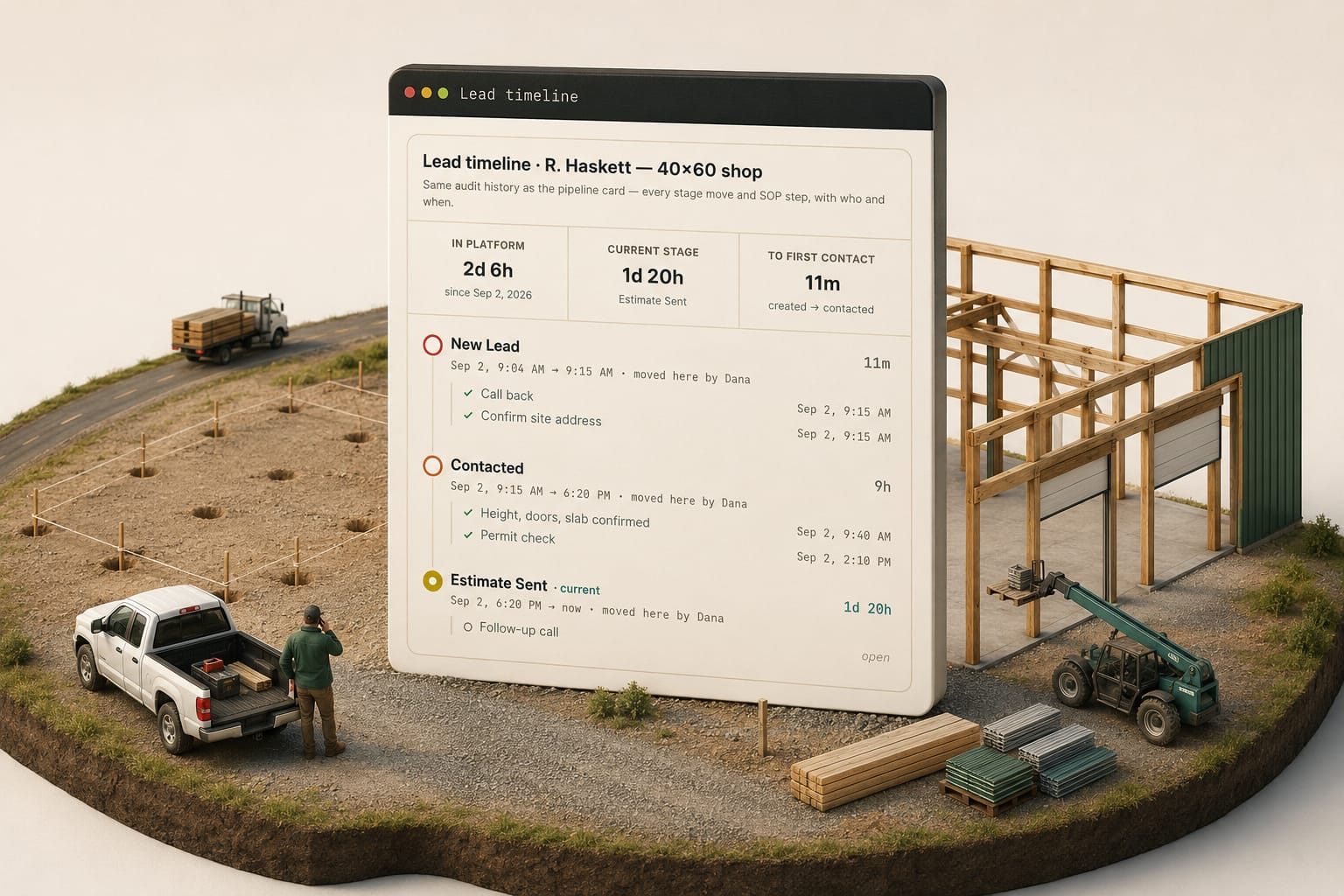
Faster than any other lead you get, because this customer is mid-search with a number in hand and three other tabs open. A calculator lead that sits overnight has usually spoken to someone else by morning. On the Sales Pipeline Board a new card wears a clock: hot for the first minutes, cooling out to an hour, then it says out loud how long it has been ignored, and the lead's timeline shows time to first contact beside every stage it passed through.
The pain is a lead that came in Tuesday and got its first call Thursday. The timeline is the record of the gap, in minutes, so a rep can see it and a manager can coach on it.
Should I give a price on the first call?
Give a range, and give the three things that will move it. A 40x60 with 14-foot walls, two overhead doors and a 4-inch slab is a different building from the 40x60 the calculator priced, and saying so on the first call is what makes the customer trust the range. Refusing to say any number until the estimate is done leaves the calculator's figure standing as the only one in the room.
What do I ask before I say a number?
Wall height, roof pitch, every opening with its size, whether the slab is in scope, the site's access and grade, and whether the county requires a permit. Those six answers move the price more than length and width do. Ask them on the first call and the range you give will hold; skip them and the estimate that follows will look like a bait-and-switch even though it is simply correct. Your own calculator should be a lead form that asks the same six, so the rep opens the card already knowing them.

How do I turn the range into a real quote without waiting a day on the estimator?
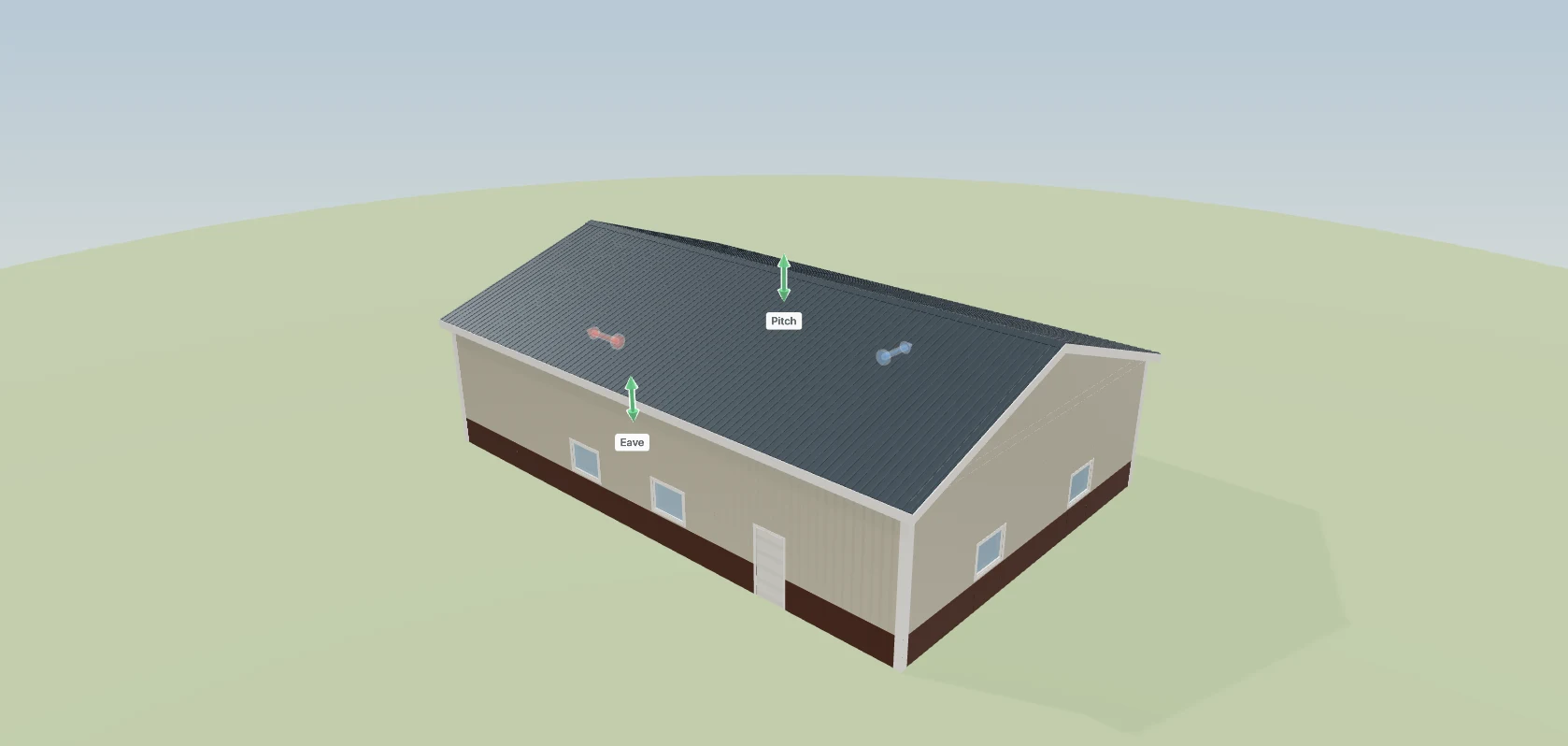
Draw the building instead of describing it. In the 3D building designer a rep drags a 40x60 to size, pulls the eave to 14 feet, drops in two 16x14 doors and a 12-foot lean-to, and the material count follows the geometry while the customer is still on the phone. Sizing takes the time it takes to have the thought, which is what turns "I'll get back to you tomorrow" into "here is what that does to the number."
What does the customer need to see to trust my number over the calculator's?
Their own building and a breakdown they can read without calling you. A PDF with a total at the bottom competes badly with a calculator that showed the customer a picture; a live estimate page with their building in 3D and the price broken into sections wins that comparison because it answers the questions the calculator raised; the sibling post on why the quote shows the building covers what the customer does with the viewer. The Live Estimate System is the whole path from that page to approval and contract, and it is the reason the rep is not chasing paperwork afterwards.
When do I follow up after the estimate goes out?
When they have read it, not on a fixed day. An estimate opened four times and studied for six minutes is a different phone call from one opened for nine seconds, and the rep can see which it was.
The call that lands is the one that answers what they were just looking at. If they have not opened it in two days, the follow-up is about the link, not the price.
The customer says another calculator came in lower. What do I say?
Line the two up by spec. Most low figures are the same footprint with 12-foot walls, no doors, no slab and a 4/12 roof, and a calculator built to sell kits prices honestly for a kit. The customer is not wrong; they are comparing two different buildings. Walk the spec line by line and let them decide which building they want. Never call the other number wrong; call it a different building.
Do calculator leads close worse than referrals?
They arrive earlier in the buying journey, which is a different thing. A referral usually has a builder in mind; a calculator lead is still deciding whether to build at all. Qualify on timeline and on whether they own the land, and the ones who do are as real as any lead you get. The post on where pole barn leads actually come from covers how the sources compare. The National Frame Building Association's post-frame resources are a useful place to send a customer who is still deciding on the method itself.
What can a rep not fix about a calculator lead?
The site. A calculator assumes level ground and easy access, and no phone call changes the dirt. Ask the access and grade questions early, then get eyes on the site before the estimate becomes a contract. That is where a range becomes a quote, and it is covered in how to bid a job without guessing.
A rep can only answer first if the lead reaches him first; in a construction CRM built exclusively for post-frame and barndominium builders, leads route to the rep who covers that county and each card shows how long the lead has waited.
What the research says
- Whoever puts the first number down shapes where the price lands. In Galinsky and Mussweiler's three negotiation experiments, the side that made the first offer got the better outcome and first offers strongly predicted final prices, but the effect disappeared when the other side focused on information that contradicted the first offer. For a rep, that means being the first real number, and when a calculator figure is already planted, steering the customer to what it left out: the doors, the slab, the site.
- The first builder to answer gets the conversation. HBR's study of lead response found that only 37% of 2,241 companies answered a web lead within an hour and the average response took 42 hours, while firms contacting within an hour were far more likely to qualify the lead. It is cross-industry, but a calculator lead on a pole barn is a web lead like any other.
- People trust a number more when they can see the work behind it. In Buell and Norton's five experiments on the labor illusion, people valued a service more when it signaled the effort it was making, and even preferred a slower result to an instant identical one; seeing the effort also made them feel reciprocity. An itemized estimate that shows posts, trusses, steel, doors and slab is visible effort. A calculator's instant figure is not.
- Competing numbers are often for different buildings. The kit seller's blog "Pole Building Prices: Beware when you compare" notes that the competing estimates customers bring in often aren't even the same size. Training reps to ask what the other number includes, before defending their own, keeps the comparison on the same building.
The rep's checklist for a calculator lead
- Call back in minutes. The clock on the card is the score.
- Say a range on the first call, with the three things that move it.
- Get the six answers: height, pitch, openings, slab, site, permit.
- Draw it while they are on the phone, so the number is yours, not tomorrow's.
- Send a page they can read, then call when they have read it.
The open loop: a calculator lead who has not bought land yet has no site, and the range you give them is honest only until they do. Keep the card, keep the range, and re-quote when the ground is real.