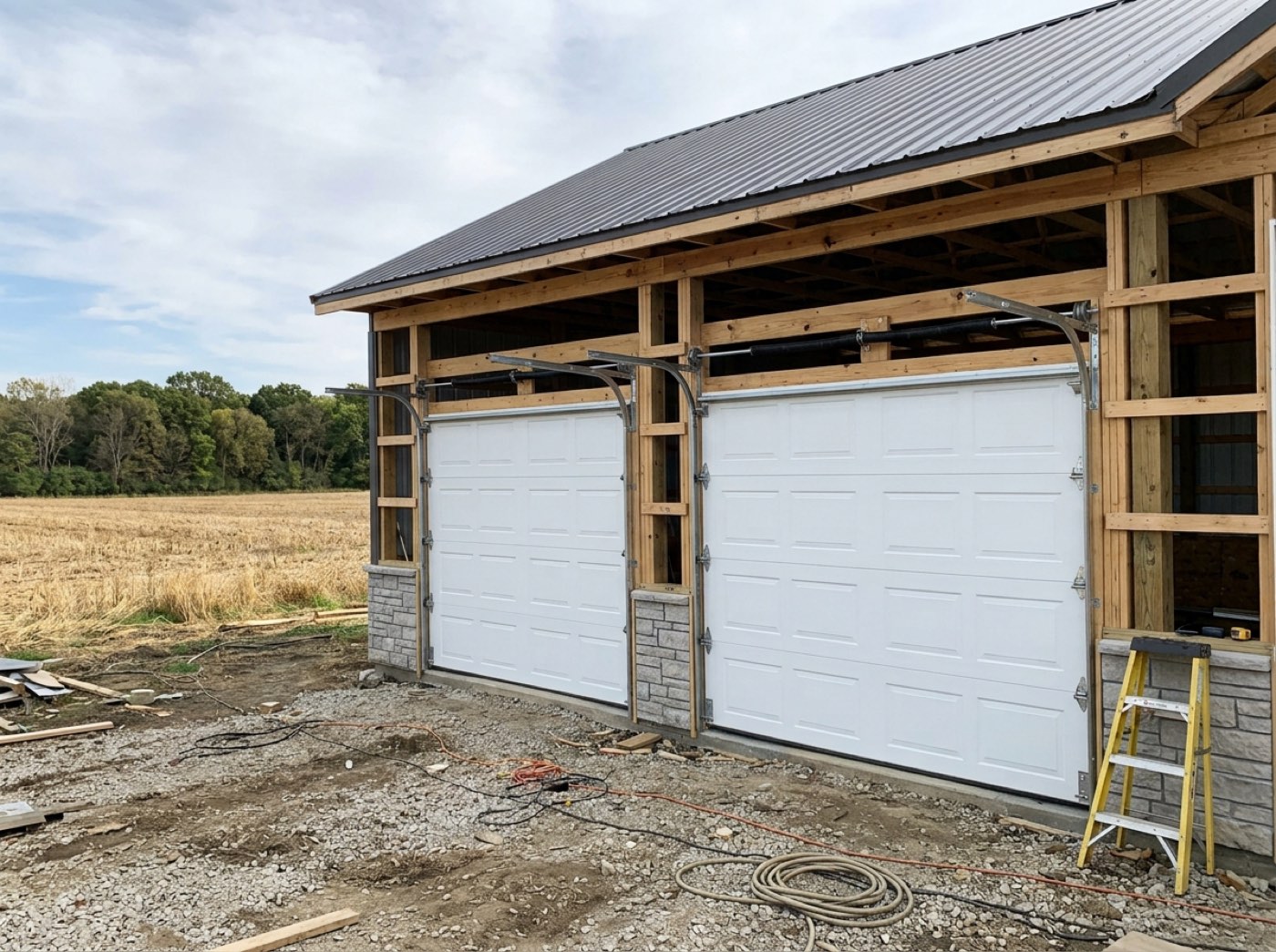
Barndominium builders with an in-house HVAC or dirt-work division price that work to themselves. The division bids from its own cost and a target margin; the builder accepts, and that agreed price is the job's cost for the scope. Only an approved change order or correction moves it. The division's actual costs set the division's margin; the builder's margin is the client price less the agreed price; and the company view is client revenue less actual cost — the internal price cancels out, so it is never counted as a sale or an expense. Built exclusively for post-frame and barndominium builders, on the Accounting tab, and off until an account turns it on.
Also called: internal subcontract · in-house division · intracompany · division margin · transfer price · self-perform trade · agreed internal price · consolidated profit
The agreed price is the job's cost — the division's overrun stays the division's
Try itThe division enters its own cost estimate and target margin, and the bid is cost ÷ (1 − margin): $5,000 at 25% is $6,666.67. Once the builder accepts it on the job's Trades section, that price is what the job budgets for the scope. When the division books an extra day and its costs reach $5,500, its margin falls from $1,666.67 to $1,166.67 — the builder's $6,666.67 doesn't move. Explain walks every step with that job's own numbers.
The HVAC crew ran a day over and the barndo's job cost quietly went up with it.
The builder can budget against a number that holds, and the division manager is measured against the estimate he gave — not against whatever the builder later charged the client.
Only an approved revision moves it
Try itAfter acceptance the price reads Agreed · locked. When the scope really changes — a mini-split added for the shop — an admin records an Approved revision: a Change order or a Correction, the new price and why. The row keeps the original ("1 revision, was $6,666.67"), and the client price for the scope follows when it's set as a margin. It works the same way as a change order on the customer's side: written down, approved, kept.
The internal price kept changing after the builder had already budgeted the job.
A price that only moves on an approved reason is one both divisions can trust, and the history answers "why is HVAC $800 more?" without a meeting.
Division, builder and company — three margins that add up
Try itAccounting → Divisions shows each in-house division's margin (agreed prices less its real costs), the builder's margin on in-house work (client prices less the agreed prices) and Company (consolidated) — client revenue less real cost, with the internal price left out because one division's sale is the other's cost. Below, In-house work by project lists every package with all six figures side by side. The job's job cost counts the scope at its agreed price and leaves out any purchase order for it, so nothing counts twice.
Division profit, job profit and the company's books never added up to the same number.
The owner sees the one profit number the accountant will see, and each manager sees his own — and the three reconcile to the cent.
Never a QuickBooks bill or sale
A hard rule sits under every push to QuickBooks: anything tied to an in-house package, a vendor that is one of your own divisions, or a vendor merely named like one, never becomes a QuickBooks bill or bill payment. QuickBooks gets the client's invoice once and the division's real costs once, and reads the division's costs back by its Class and the job — see QuickBooks integration.
Someone set up the HVAC division as a vendor in QuickBooks, and every internal job doubled the books.
Posting the internal price as a bill and a sale inflates revenue and expense on every job; the rule makes it impossible rather than something to remember.
- 1The division enters its cost estimate and target margin; the bid is cost ÷ (1 − margin) — $5,000 at 25% is $6,666.67.
- 2Once the builder accepts, the agreed price is locked; an admin-approved revision (change order or correction, with a reason) is the only way it moves.
- 3The division's actual costs come in by hand, from a CSV, or read from QuickBooks by the division's Class and the job.
- 4Division margin = agreed price − actual cost; builder margin = client price − agreed price; company = client price − actual cost.
- 5If the division's costs rise from $5,000 to $5,500, its margin falls to $1,166.67 — the builder's $6,666.67 doesn't move.
- 6Explain on any package walks each step with that job's real numbers.
- 7The job's Budget & margin card counts the scope at its agreed price and leaves out any purchase order for it, so nothing counts twice.
- 8A hard rule keeps it out of the books: anything tied to an in-house package, or a vendor that is one of your own divisions, never becomes a QuickBooks bill or bill payment.
When one company runs two divisions on one set of books, posting the internal price as a vendor bill or a sale overstates revenue and expense on every job — and the division manager still can't see whether his crew made money. Builders end up keeping a spreadsheet beside the accounting system to track what the in-house trade was promised versus what it spent. So the agreed price lives where the job is run, as a commitment that never reaches the ledger. The builder budgets a price that only moves through an approved change; the division is measured against its own estimate; and the owner sees one consolidated number with the internal price left out — the way the accountant will see it.
- Internal prices posted as real bills and sales, inflating revenue and expense.
- A division's overrun silently changing the builder's job cost.
- No record of what an in-house division was promised versus what it spent.
- Division margin, builder margin and company profit that don't reconcile.