Post frame building software is worth buying the year re-typing a job starts costing more than the subscription, and the only way to know which one to buy is to run your last 40x60 through it — not a vendor's demo job. Most post-frame builders have a re-typing problem, not a software problem, and the industry's answer for five years has been another subscription to re-type into.
What does one 40x60 shop ask the software to do?
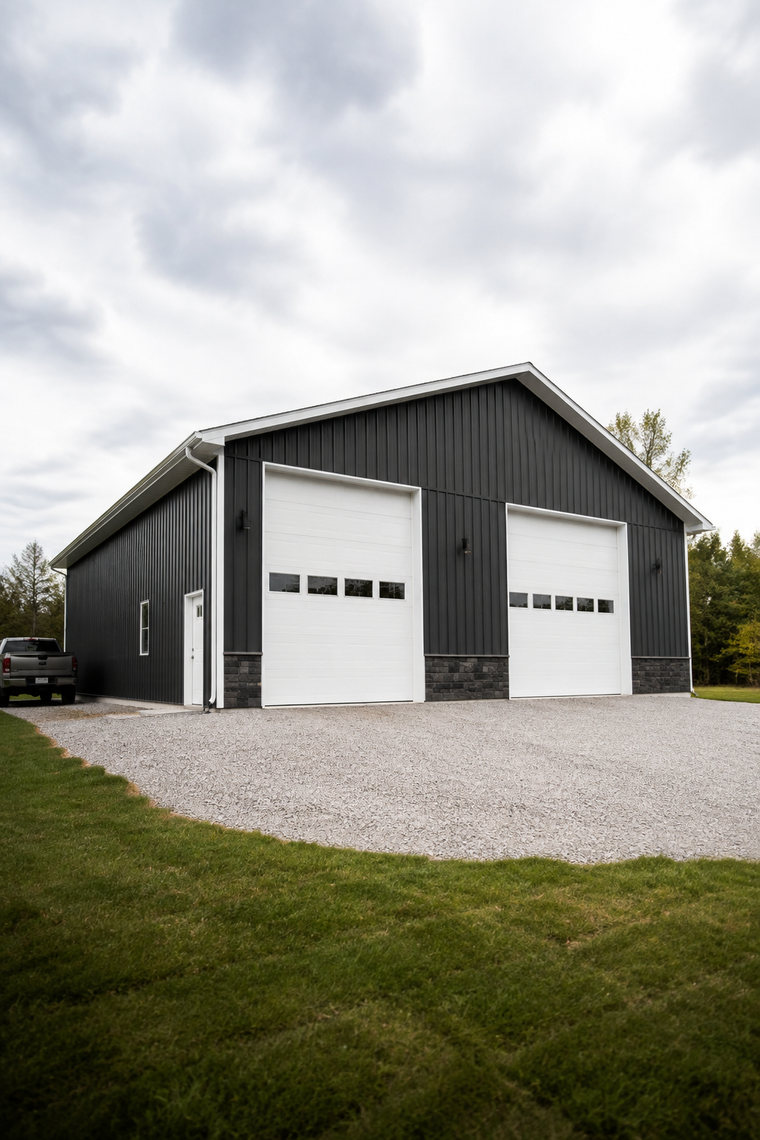
Hold every tool up against one real job: a 40x60 shop, 14-foot sidewalls, posts at 10 feet on centre, a 12-foot lean-to on the south wall, and a customer who added two 3070 walk doors after the posts were set. That building needs six things done.
- Catch the lead and answer it fast. A form fill at 7:40 Tuesday night answered Wednesday morning is a different lead than one answered Friday.
- Price the structure to a number you would defend across a kitchen table.
- Turn the price into a signed document without retyping the scope.
- Run the build through weather that ignores the schedule.
- Bill it — draws, and change orders priced before the work happens.
- Keep the record after the crew has moved on.
The Tuesday-night lead is the cheapest of the six to get right and the most often skipped. On the Sales Pipeline Board it lands as a card with the source, the building and the clock on it, and goes stale in public rather than in someone's inbox.
Nobody demos the sixth job. Two years on, the customer says the quote included gutters; if the texts, the versions and the approval live in four apps, that argument is yours to lose. One conversation per customer keeps every text, email, call and photo on the contact, in order.
Which platforms do post-frame builders actually run?
| Platform | Genuinely great at | Fits best when |
|---|---|---|
| SmartBuild | Post-frame structural design and takeoff | The building must be engineered and quantified properly |
| Buildertrend | Full project management, real client portal | An office manager owns the system daily |
| JobNimbus | Contractor pipeline, strong in roofing | High volume, short cycles |
| Jobber / ServiceTitan | Scheduling and dispatch for service work | Short visits are real revenue |
| GoHighLevel | Lead capture and follow-up automation | Marketing volume is the constraint |
| Contractor Foreman | Broad coverage at a low entry price | Wide coverage on a tight budget |
| QuickBooks Online | The books | Always |
All good products. The question is whether the shape matches a post-frame build: three to twelve weeks, an engineered structure, a permit, a draw schedule and one customer who calls you directly. The National Frame Building Association publishes the design guidance that separates post-frame from stick-built, and your jurisdiction adopts the ICC code cycle that governs the permit; few platforms were designed for that shape, so most builders assemble one from parts.
Why are there no prices in that table?
A printed price is stale before you read it, and sticker prices are not comparable: per-user pricing means two new crew leads change the bill, a flat tier covers three people or thirty, and volume pricing charges a $2M builder and a $9M builder differently for the same software. Highlight every software charge on twelve months of statements, then ask every vendor, in writing: the price basis; any implementation fee; monthly or annual; which demo features are in the quoted tier; and what it costs to get your data out if you leave. The last one is the question nobody asks and the one that matters in year three.
What does the tool-stack tax actually cost?
The subscriptions are the small half; the re-typing between them is the large half. Illustrative arithmetic, with your own figures in place of these: the scope typed into four tools at twenty minutes a re-key, three re-keys a job, 60 buildings a year is 60 hours — $2,100 at $35 an hour — on top of four subscriptions at, say, $228 a month. Roughly $4,800 all in, and the cash is the cheaper half.
The error cost is lumpier. When the estimate and the invoice are separate documents they drift: a $14,000 draw goes out against a scope that changed when the walk doors were added, the customer spots it first, and you eat the difference. One of those a year wipes out the savings from every tool picked on price — the change order that protects your margin is the paperwork side. The software side is a change order that adjusts the remaining draws itself.
How do you run a two-week test that ends the decision?
Evaluations sprawl when builders test against imaginary work. Use one finished job and one live one.
- Days 1–2. Pick the real 40x60 with the lean-to, the change order and the mildly annoying customer.
- Days 3–5. Rebuild it in each tool: estimate, proposal, contract, two change orders, three draws. Time it.
- Days 6–8. Put the live job in and make the crew use it — on phones, in a truck, on one bar of signal.
- Days 9–11. Break it on purpose. Raise the eave two feet after the proposal is signed. Add the two walk doors. See whether the price, the contract and the invoice move, or you do.
- Days 12–14. Price the switch, not the software: migration, training, the slow weeks.
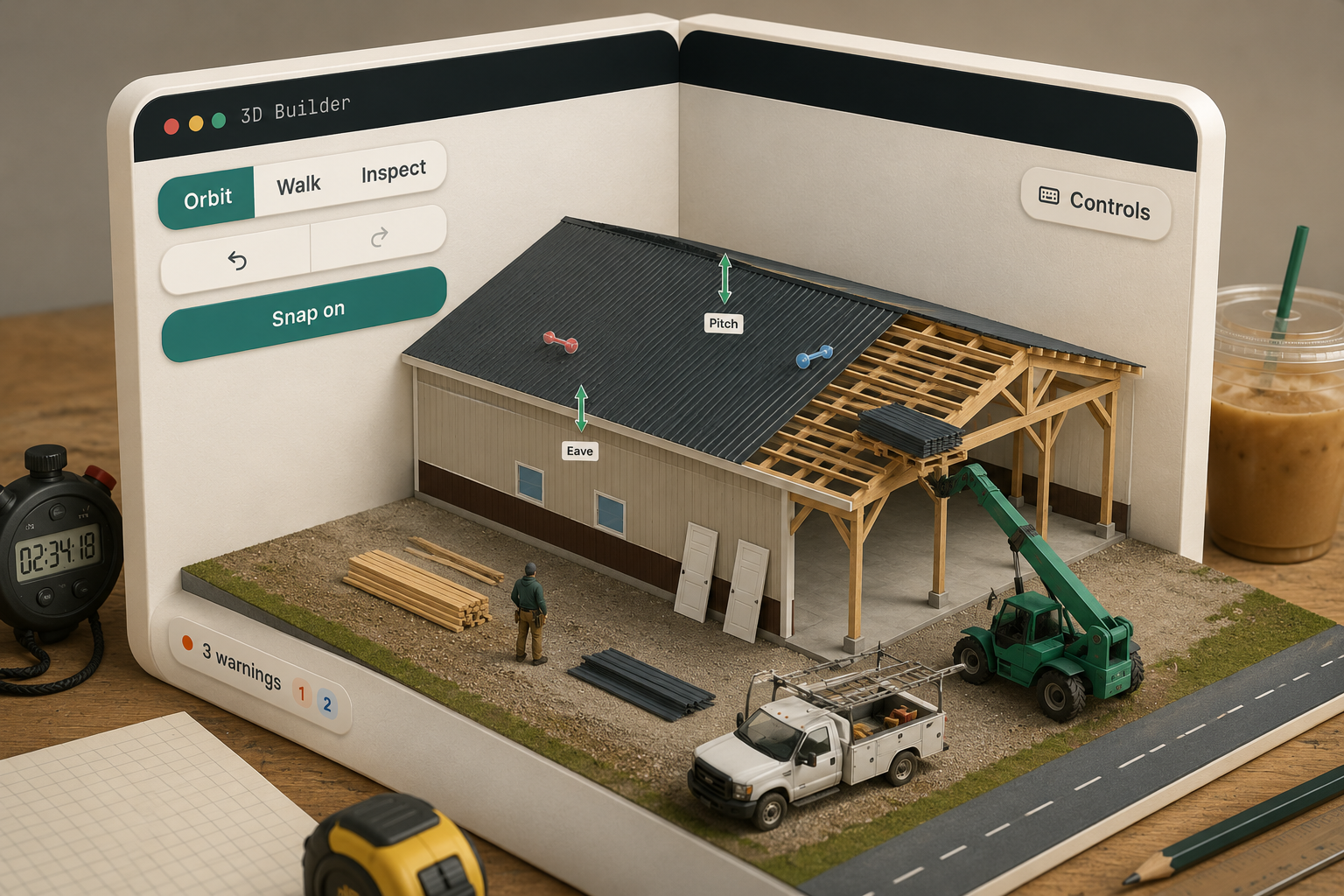
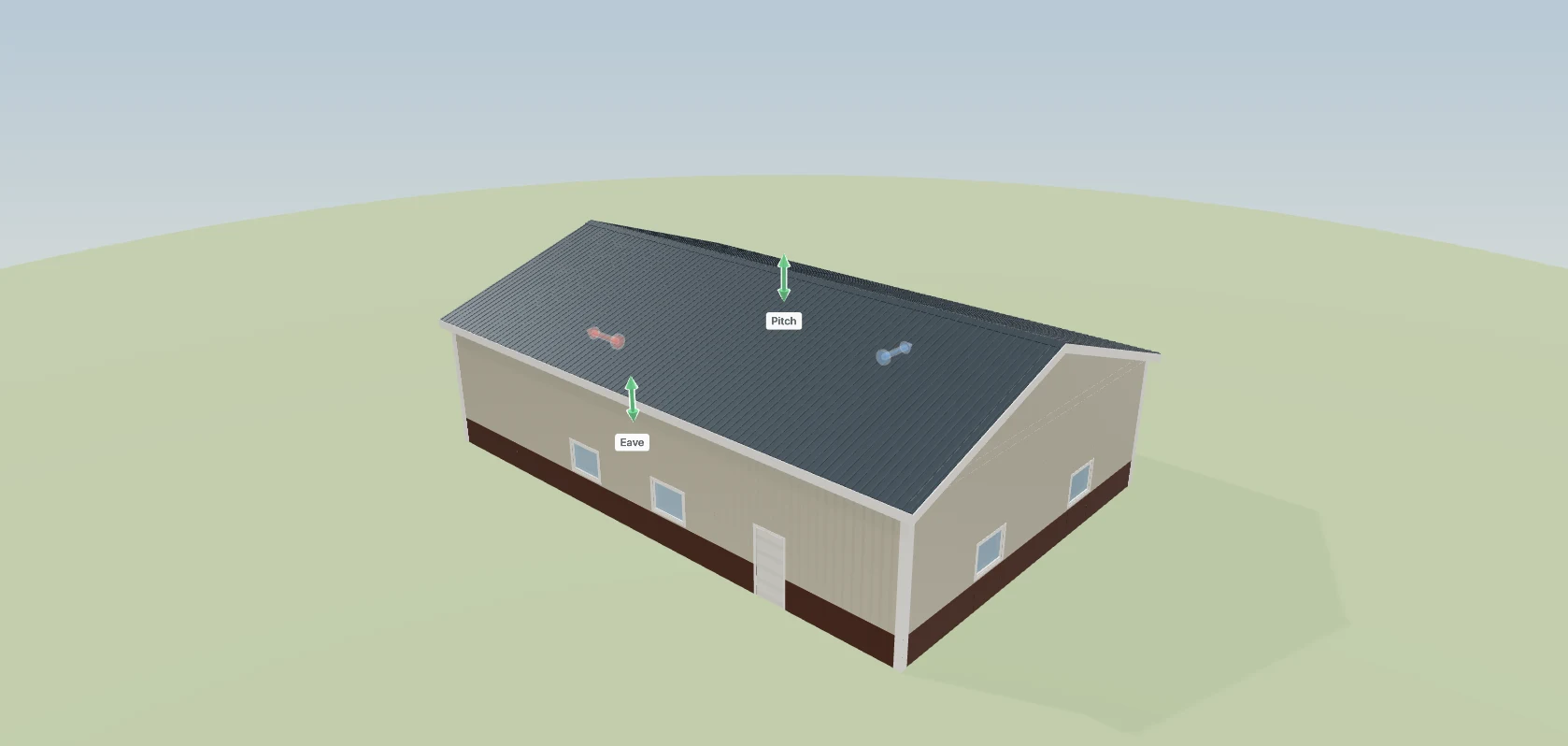
Day nine is where geometry shows. In the 3D building designer the eave is a handle you pull, and the posts, girt rows, panel lengths and trim follow it; the two doors cut their own openings and take the girts out of the hole. A tool that asks you to edit thirty rows instead has just shown you year three.
If two tools survive, buy the one your foreman did not complain about. If estimating is the only piece you are solving, read the honest fit guide to pole barn estimating software; the whole lead-to-paid chain on one link is the Live Estimate System.
Who should not buy Leads 2 Build?
Mostly service work: Jobber and ServiceTitan are built around dispatch. Commercial work with full spec sets: Procore's home ground. A team that already runs Buildertrend well: a system people use beats a better one they don't. Fewer than a dozen buildings a year: a solid estimate template will carry you until re-typing costs more than the subscription.
None of this fixes pricing accuracy. Software moves a number faster and stops it drifting; a stale labour rate now produces a wrong number very efficiently. Rebuilding that rate from your last ten buildings — how to bid a construction job without guessing takes it apart — is still yours.